

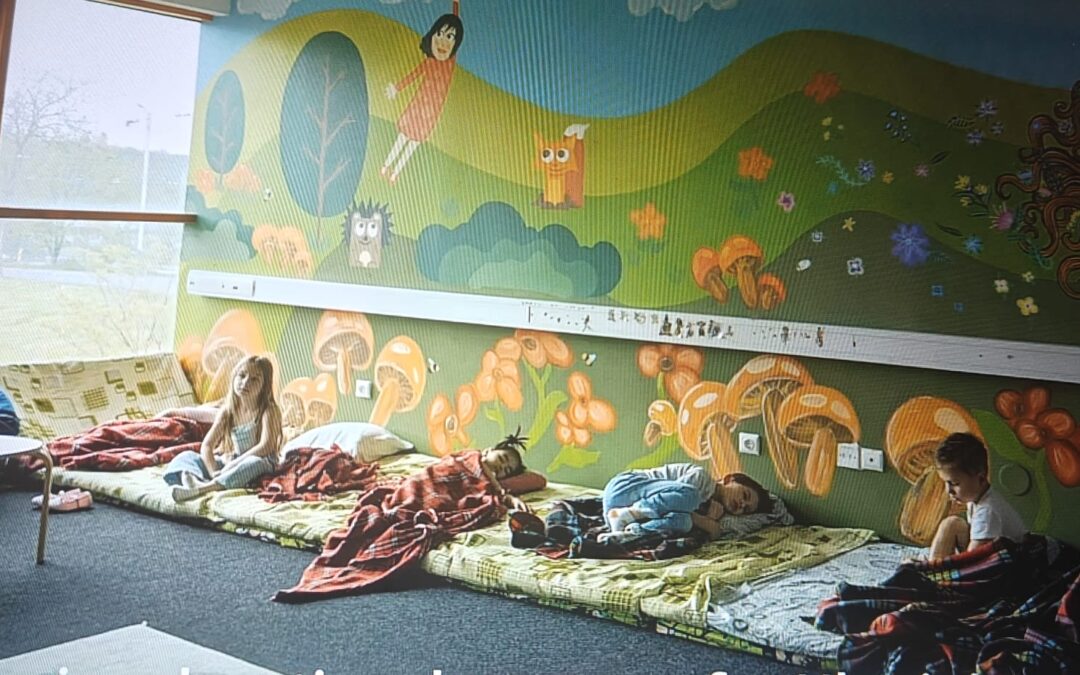
When displaced children arrive in a host country, key support services for them (alongside support for their parents) include access to kindergarten and school. The Nicolina Centre in Iași offers a warm welcome and a truly friendly environment for Ukrainian children, serving not only as an after-school and day-care centre, but also as a place of joy and belonging in Iași, Romania.
The persons displaced from Ukraine arriving in Romania were usually in need of logistical, financial and service support, as well as coordination from the relevant authorities and NGOs working at the borders. The goal of the Nicolina Centre is to respond to these needs, in a way that is sensitive to those in high social and psychological distress, ensuring that they can be both assessed for referral and given access to necessary services in the same place.
The Nicolina Centre is the first of its kind in Romania where management is shared among 4 NGOs, as well as the municipality. Each carries out specific tasks according to its area of expertise.
provided a building of 4 000 sqm, covers the budget for utilities and maintenance, and employs 7 people (social workers, nurse and cleaning personnel).
The Federation of NGOs for Social Services
designed the project’s model of intervention and ensures the overall management of the centre. It is also responsible for the communication with and lobbying of relevant authorities for the improvement of social services and related policies and legislation.
is in charge of logistical support and the management of new arrivals, as well as providing translation/interpretation for residents and service recipients.
provides psychologcial health and parenting support, as well as the ‘Care Practice’ – a programme of advice and care support for mothers and children.
The Grupul Zambetul Nostru Association
runs activities with children. These are educational (including Romanian and English language training), social and leisure. Service recipients are mainly referred to the centre by authorities or other NGOs, and some reach it via their own informal networks. On arrival, they are assessed and provided with the services they need.